The Mekong River: A Journey Shaping the Land of Nine Dragons Through Silt and Time
The Mekong River is more than a river. It is a grand epic of nature-a journey spanning millions of years, shaped by land, water, and human presence-giving rise to the Mekong Delta, one of Southeast Asia’s most fertile regions and the cradle of Vietnam’s distinctive river-based civilization.
Few realize that today’s tranquil landscape of winding canals, fruit-laden orchards, and peaceful villages was once part of a shallow ancient sea. It was a place where saltwater and freshwater converged, where layers of sediment quietly accumulated over millennia, writing the story of the formation of one of the youngest deltas in the world.
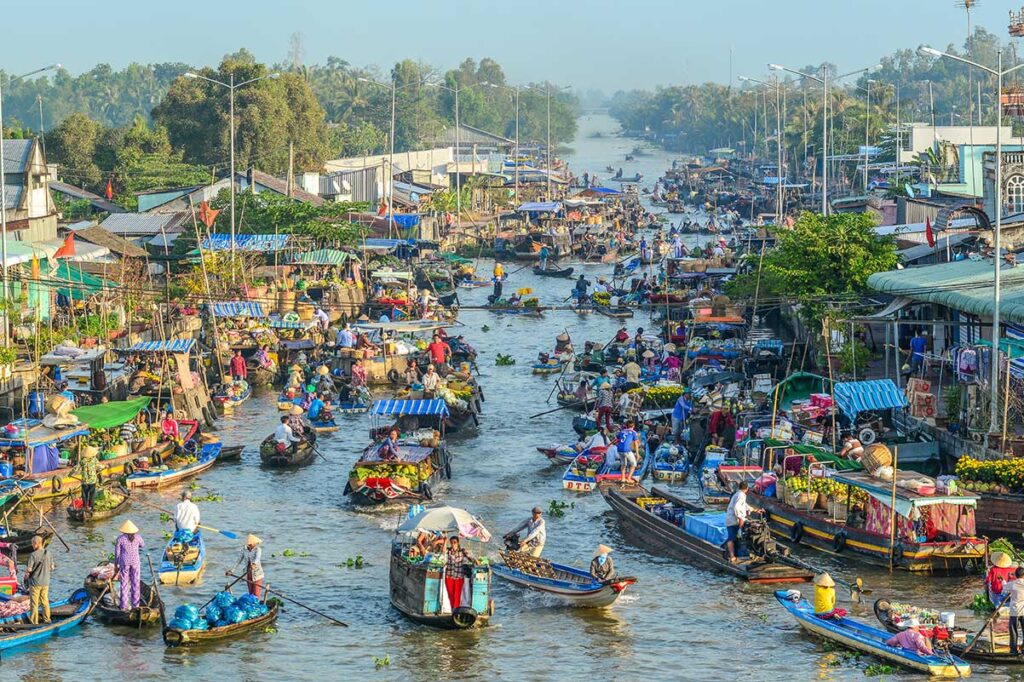
Image 5 – Ngã Năm Floating Market:
From an Ancient Gulf to a Fertile Delta
The history of the Mekong Delta is deeply intertwined with geological movements and global climate changes. Around 5,000–6,000 years ago, during the Holocene epoch, rising sea levels submerged the entire area, forming a shallow inland gulf that at times extended as far as present-day Cambodia.
It was during this period that the creation of the Land of Nine Dragons began. The mighty Mekong River, originating from the Tibetan Plateau, carried vast quantities of sediment along its nearly 4,500-kilometer journey across six countries. Upon reaching the edge of the ancient gulf, the river’s flow slowed, allowing fine sediments to settle.
Over thousands of years, through successive cycles of marine transgression and regression, these sediment layers grew thicker. The deposits gradually filled the gulf, forming early sandbanks, natural levees, and wetlands. As the Mekong enters Vietnam, it divides into two main branches-the Tien River and the Hau River-before spreading into nine major distributaries that flow into the East Sea. The majestic image of these nine waterways extending toward the sea inspired the poetic name “Cuu Long,” meaning Nine Dragons.
This continuous process of sedimentation has enabled the delta to steadily advance seaward, expanding southward and southwestward at a remarkable pace. Even today, the Mekong Delta remains one of the world’s youngest, most dynamic, and life-rich deltas.
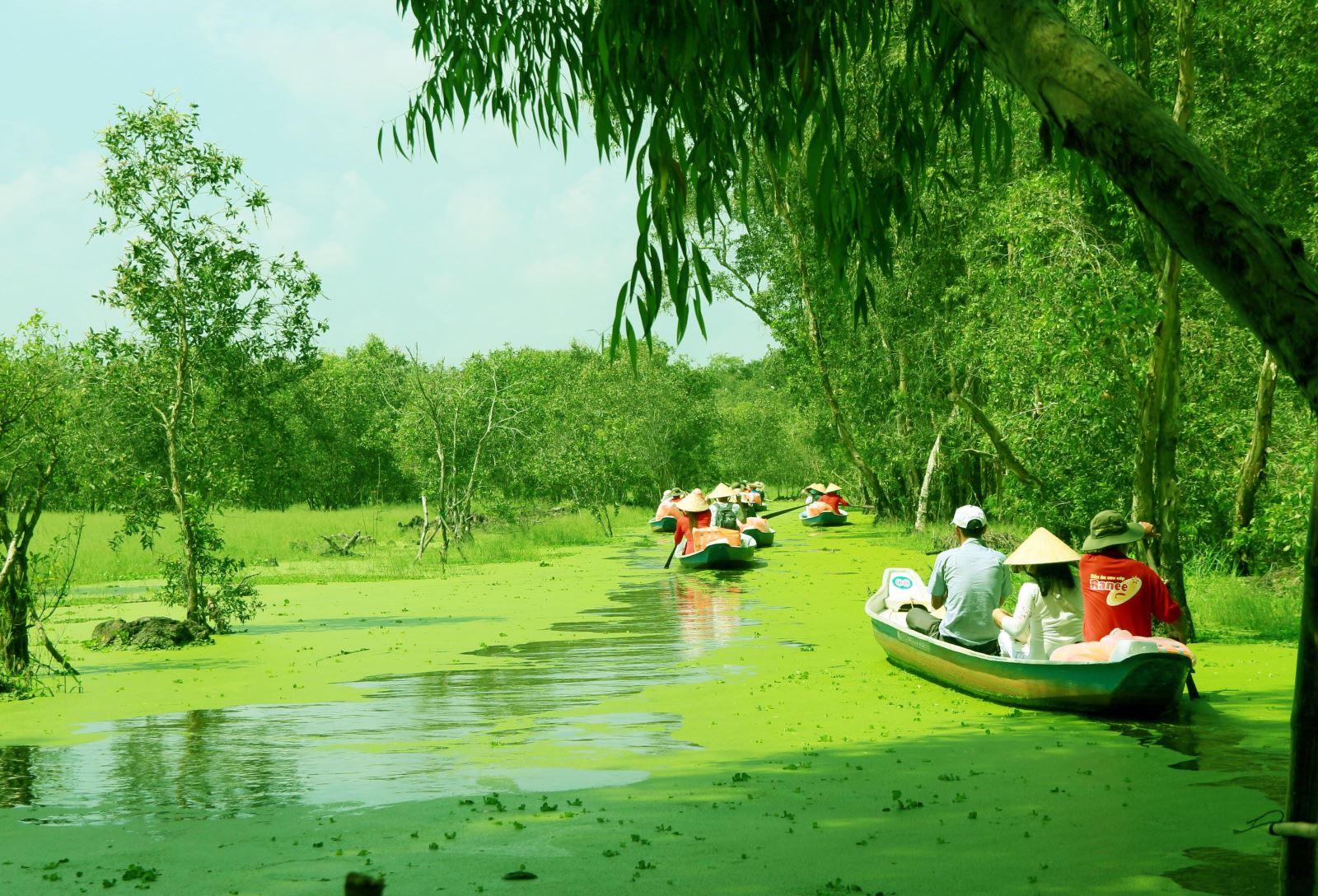
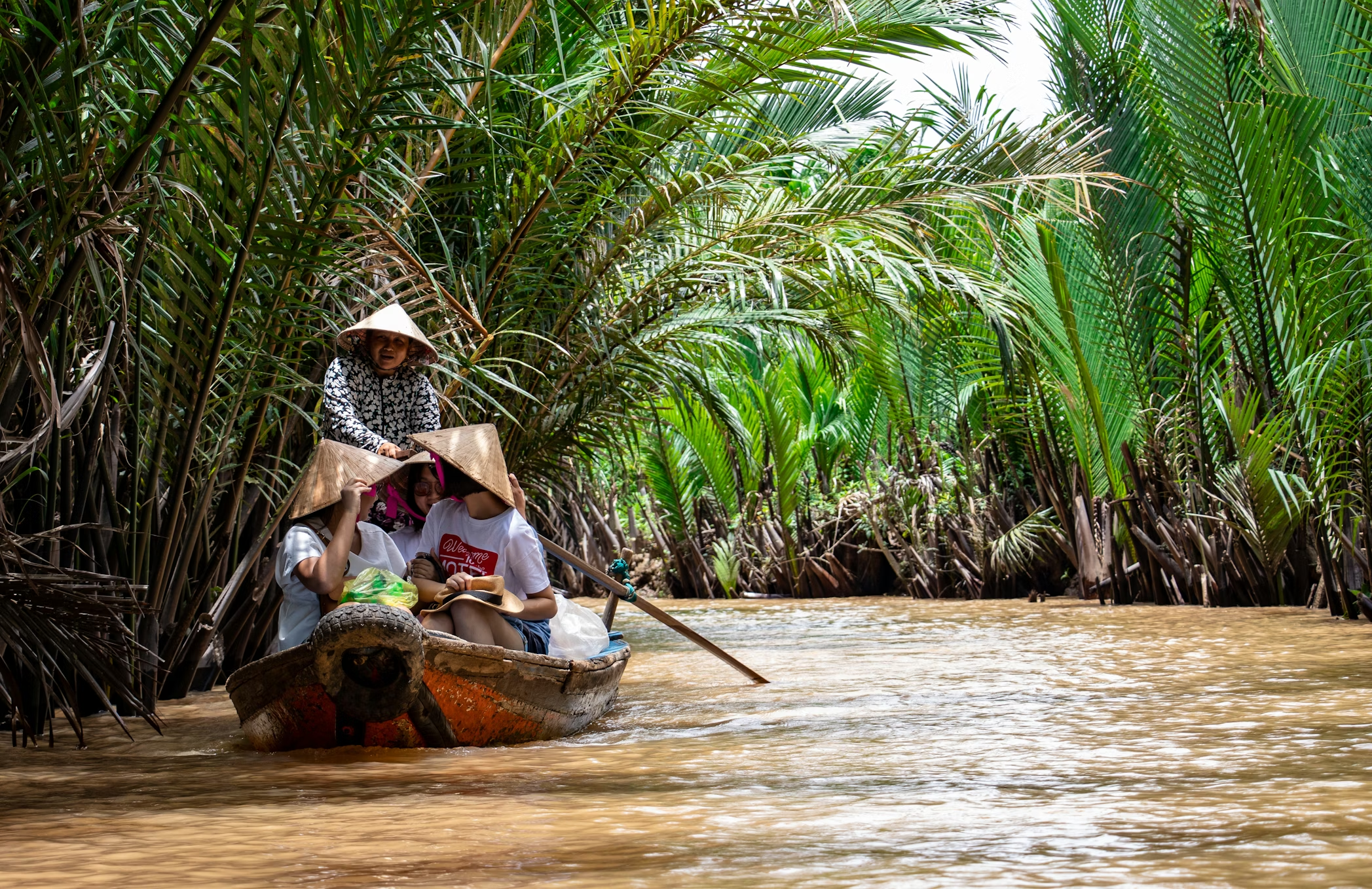
Image 3 – Mangrove / flooded forest canal:
The River That Gave Birth to a Water Civilization
Sediment brought not only fertile land but also life, culture, and civilization. From early times, human settlements emerged along the riverbanks and canals. Archaeological evidence of the Oc Eo culture, associated with the ancient Funan Kingdom (1st–7th centuries), reveals that this region was once a vibrant hub of international maritime trade thousands of years ago.
Over centuries, Vietnamese, Khmer, Chinese, and Cham communities coexisted and reclaimed the land together. They developed a remarkable survival wisdom-learning to “live with floods,” adapting to and harnessing the rhythm of the waters rather than resisting it. A dense network of canals was excavated to manage irrigation, flood drainage, and transportation, forming the lifelines of the region.
Homes were built along the waterways, markets operated on boats, and daily life followed the rise and fall of the tides. Through continuous adaptation and creativity, a unique riverine cultural identity of Vietnam’s southwestern region took shape-distinct and irreplaceable.
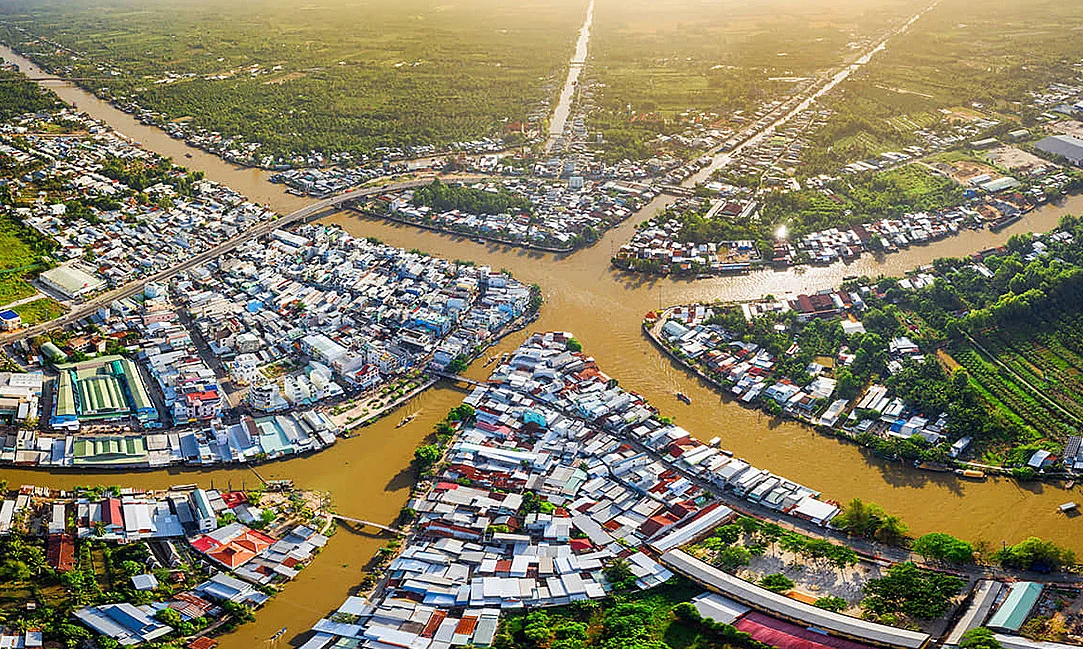
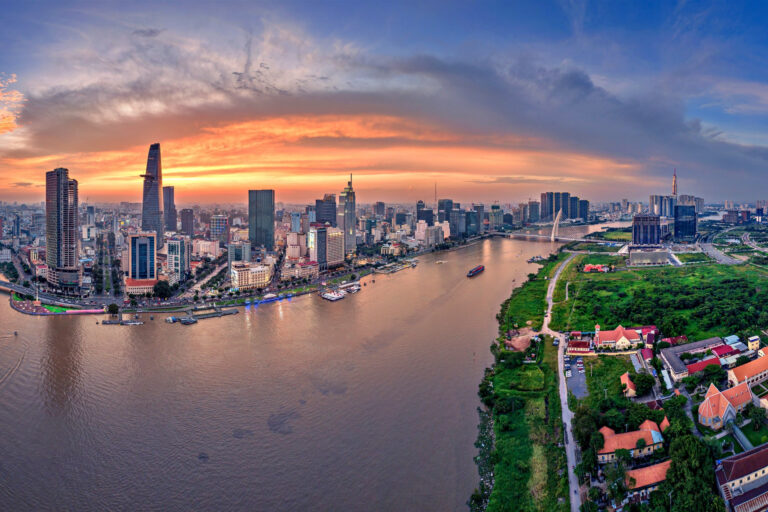
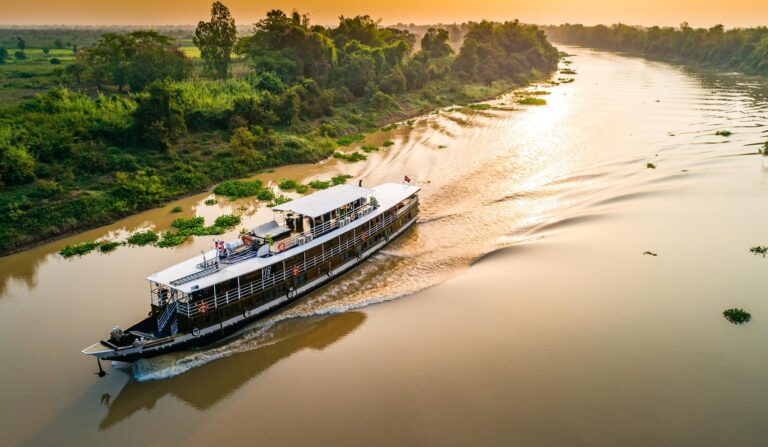
Image 2 – Aerial view of a river-based town:
One of Vietnam’s Most Fertile Regions
Today, the Mekong Delta is regarded as Vietnam’s primary rice bowl, fruit-growing region, and seafood production center, playing a vital role in national food security and export value. Its intricate network of rivers and canals serves not only as an endless source of freshwater and nutrients but also as a natural transportation system connecting hundreds of villages, towns, and cities.
Beyond agriculture, the region boasts one of the country’s richest ecosystems, featuring coastal mangrove forests, vast melaleuca woodlands, and wetlands recognized as UNESCO biosphere reserves. Numerous studies identify the Mekong Delta as a global biodiversity hotspot, home to thousands of plant and animal species.
The Mekong River: Beauty in Slowness and Resilience
The unique allure of the Mekong River lies not in dramatic force or grandeur, but in its gentle, steady, and enduring flow. For thousands of years, the river has quietly nourished, protected, and sustained human life, shaping a land that is fertile, resilient, and deeply human-centered.
Today, traveling along the Mekong is more than a scenic journey-it is a passage back through time, touching the origins of a land formed by sediment, water, and the immense patience of nature itself.